What Can We Learn From Buddhism?
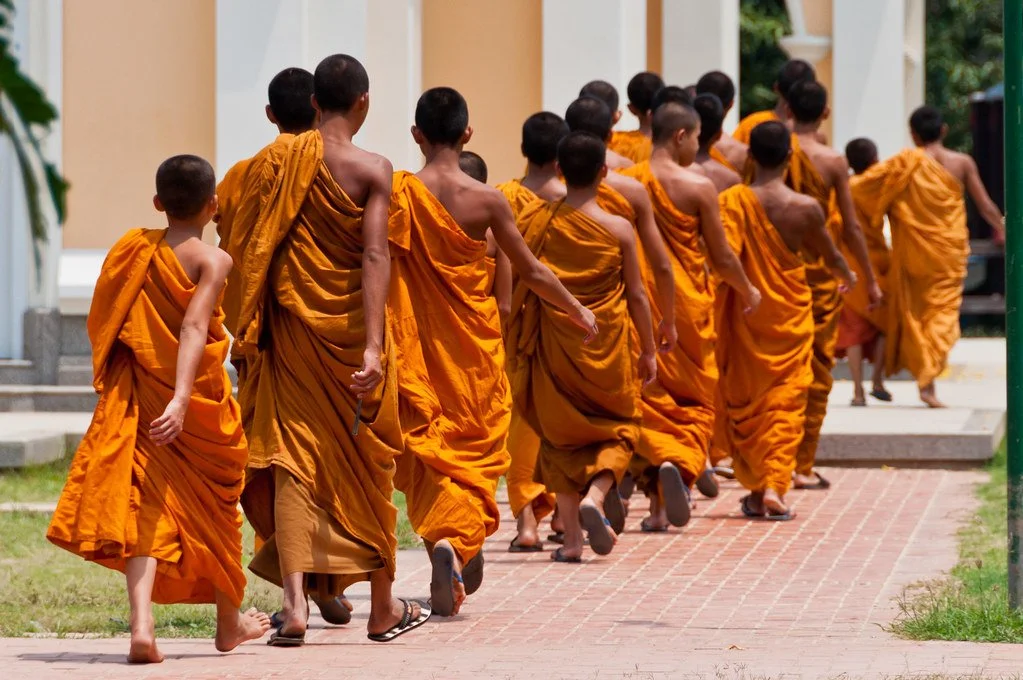
What is Buddhism, actually, when we strip it down to it's most potent and useful parts? And which of these might the Western World, it's institutions, homes, schools and/or workspaces, benefit most from?
The word that comes to mind is 'rituals'. We all have them - it's a natural part of automating our schedules, planning our days and connecting deeply with the things we love and find most important. That doesn't mean that all rituals are 'equal' however. To take a simple example: when spending time at a Buddhist Centre, usually the ritual of eating a meal is done in silence. In Zen Buddhism, the Tea Ceremony, performed with many focused, consciously designed steps, is also a largely silent exchange, between server and receiver. One typically sits on the floor in such Tea houses in Japan, and the green tea is fragrant and pure - without milk and sugar added, as is typical in the UK. To reimagine English tea-drinking habits as a silent, sugar-free and shared experience, sat on the floor of one's home, might seem a bit far-fetched or unnecessary, but it points to what really matters, from my learned perspective so far, about Buddhism. The small details which, over time, become much larger in fact.
James Clear in 'Atomic Habits',along with countless others exploring the science and practice of effective 'habit building', underlines exactly this - that the little things we do every day make a big difference.
I was reminded of an enjoyable and pertinent quote recently regarding this: "There is no such thing as Buddhism, only Buddhists". What this points to, for me, is the importance of what each of us actually does, every day, throughout our lives. We are what we do, and the most important thing for true Buddhists might be the way they sit, eat, breath, communicate, prepare food etc, rather than the religious affiliation they identify with. At least this is a 'truth' or 'working hypothesis' I wish to explore for the sake of my own practice and when working with others.
A friend of mine works for a quickly-growing start-up company in the Netherlands, focusing on guiding young people throughout a conscious and multi-faceted gap-year programme. At the end of every hour, a bell goes off and everyone in the office (during office hours) takes 60 seconds to stop what they're doing, close their eyes and return to their breath.
Another friend of mine teaches Dance to hundreds of students across various public schools. In order to calm down the children and help them to relax during and after the fun and exciting dance-related exercises, she invites them to play 'Ninja'. 'Ninjas' move very slowly across the room and get slower and slower until they are not moving at all; at which point they close their eyes and try to stay still for as long as they can, until my friend (the teacher) says that the class is over.
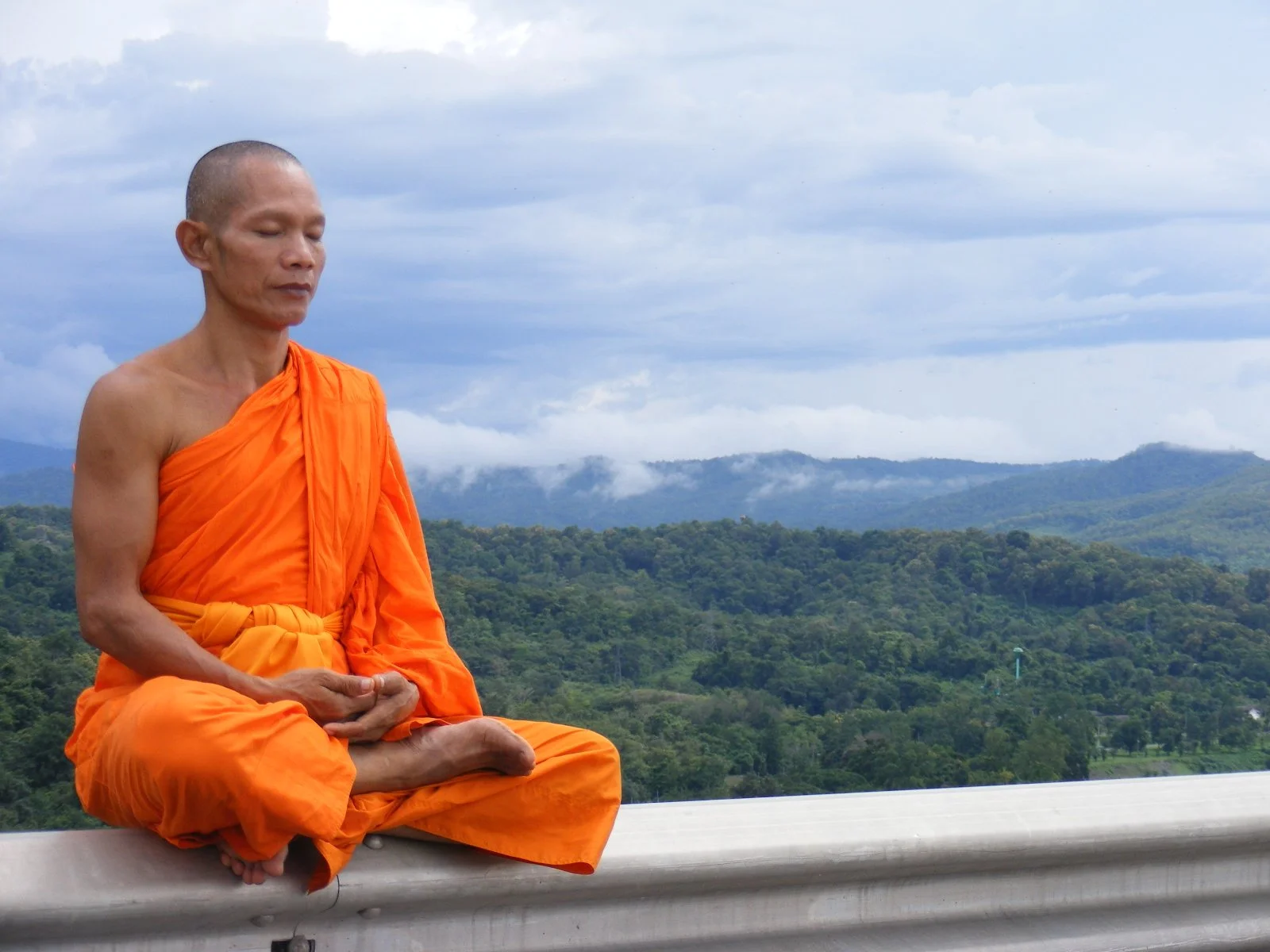
These two examplesinspired me endlessly when I heard about them, and I couldn't help (afterwards) to notice the subtle ways we have found to be 'Buddhists' throughout our daily lives, without needing to affiliate with the religion itself per se. Equally, I am ever-more saddened by public spaces and workplaces that offer desperately few opportunities to return to ourselves, whether through silence, physical practice, breathing, tea or other related rituals. Almost everyone I know suffers from some amount of 'burnout', stress, frustration or extreme fatigue, directly related to their place of work or study, and indeed there is much published literature already documenting this reality for the everyday person in Western countries especially.
"All models are wrong, but some models are useful"(George Box), and Buddhism may well be a highly useful 'model' that we could better use throughout our week in the UK. With Christianity having an increasingly smaller impact on the younger generations coming through our school institutions and workplaces, perhaps it's ever-more necessary to utilise some form of 'higher knowledge' (religion or otherwise), if only to provide, test and experiment with their most useful and practically-relevant tools and rituals. Buddhism has many of such rituals (some of which I've already mentioned), which I believe could be easily and sustainably applied in new and unique ways. Not only that, but as my previous examples showed, they have the capacity to be creatively adapted for different contexts - a child's dance class, an office routine or any other number of everyday contexts.
Furthermore, arguably the most important 'institution' is that of the family home. My previous research into Unschooling contexts and parenting in India showed us, rather powerfully, the importance of young peoples' norms and habits in the family home. It's where, typically, we spend most of our time after all, and our parents and siblings (in most cases) become the people, and therefore role models, who we spend most of our time with. The daily rituals and habits of parents become those of their children also, largely despite their schooling contexts (public schooling, home schooling or otherwise). A highly-esteemed child psychiatrist we worked alongside in Pune (India) had been acutely aware of this reality for decades already - in turn, he was remarkably relaxed about his daughters' culture and environment at school (and later college), because he knew and trusted that their home environment was healthy, loving and supportive.
Obviously the domains of home and workplace / school are not mutually exclusive. All of such environments can be studied and addressed with (I expect) compounding benefits also.
Some other 'Buddhist' rituals, not yet mentioned, might include certain acts of service also - children in Japan, where I taught for several months, sweep the floors of their own classrooms for instance; just as cleaning, cooking and/or gardening 'chores' are standard practice at all the Buddhist centres I've visited and stayed in around the world. Is it the chanting, reading of scriptures and meditation practices that develop the qualities of a Buddhist, or is it the relatively higher number of hours spent carrying out simple acts of service and duty to their homes and communities?
The 4 'Zen dignities' (lying, sitting, walking and standing)as practiced and refined throughout the Martial Art forms such as Chi Gong and Tai Chi, for thousands of years across China and Japan especially, also highlight the potential value of simple, safe physical practices in domains other than Martial Arts schools and gyms. I have utilised many of such physical rituals with men, women and children of all ages for over a decade now, through my various teaching jobs, and I find that the physical 'embodied' aspect of these practices fosters a humility, presence, attention and, in turn, confidence in individuals that purely cognitive or communicative rituals fail to achieve. The work of Moshe Feldenkrais (and others) goes a long way to 'prove' that, through the physical nervous system and the senses especially, we are indeed what our physical bodies tangibly experience, more than anything else. The 'tai-chi push hands' game is one of the best examples of such a practice, that is easily applied, simple and safe for all involved, with huge physical, mental and emotional benefits.
To conclude, a few specific research questions might eventually include the following:
-What is the impact on positive well-being for family members after a 6-week Mindful-nest intervention in the home (a weekly 60-minute meditation circle with all family members in the home for 6 weeks)?
-What perceived improvements are there in the attentional and learning capacities of children after 4 weeks of 'Tai Chi Push Hands' rituals, carried out by both teachers and students in both primary and secondary school settings?
-What are the perceived levels of job satisfaction for staff members at a University institution after a 6-week, daily 'silent tea break' intervention?
-What are the self-reported levels of meaning and satisfaction for students engaging in small, designated acts of service at their local public schools, compared with their 'control group' counterparts?
Did you enjoy this blog? If so, click here to support Daniel’s work…