On Cultivating Integrity Through Movement
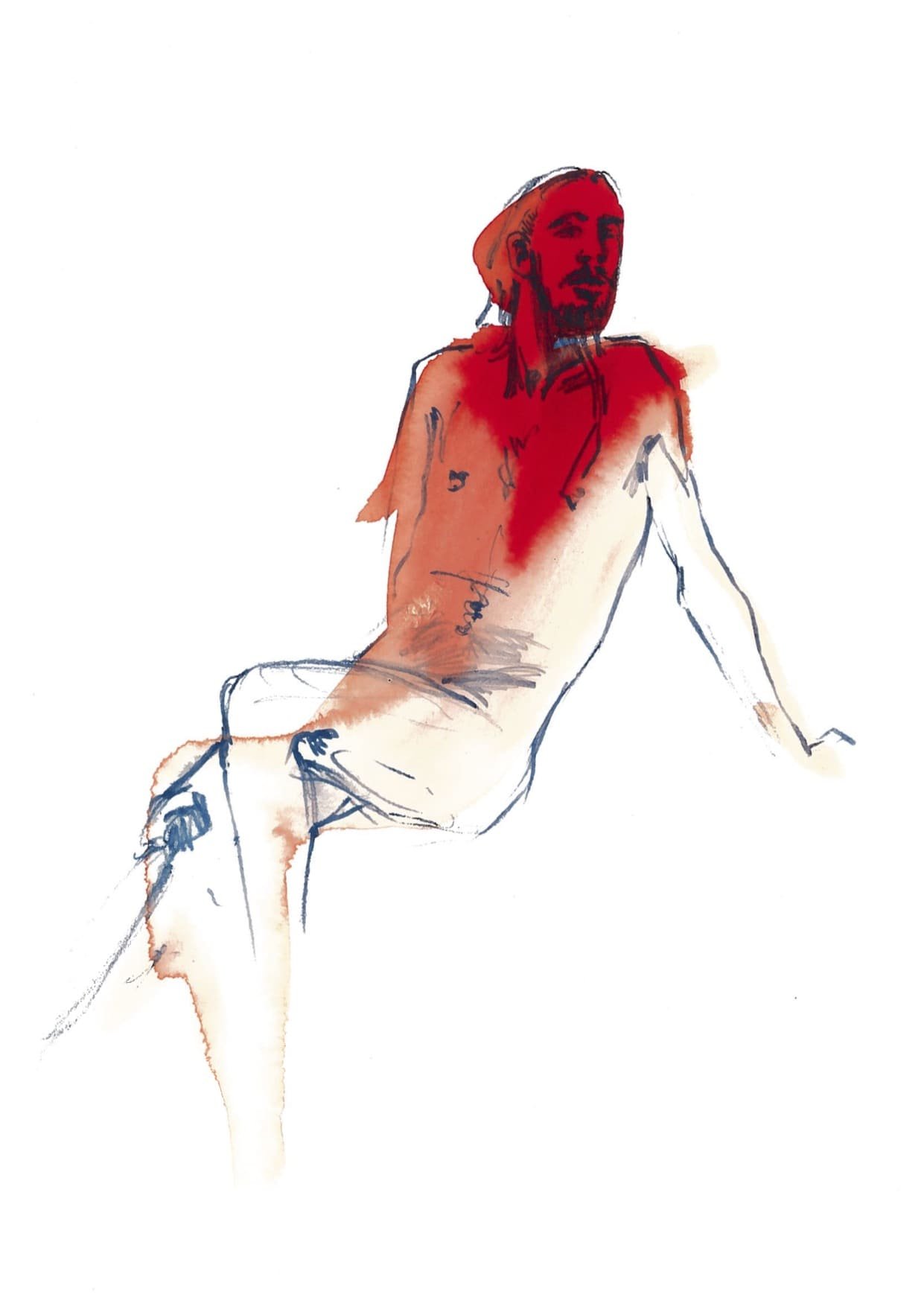
“The ability to navigate one’s daily life with compassion, honesty, grace and an always-enduring sense of humour”
(a working definition of ‘Integrity’)
Movement is a remarkably broad term. That’s the power of identifying with it, for it allows us a diverse rainbow of experiences, teachings, practical exercises and qualities to be developed as an always-evolving human species. The potential issue with such a giant maze of possibilities, however, is that it’s easy to get lost or overwhelmed amidst the vastness of it all.
As a movement practitioner of various kinds throughout my life, I find myself searching for the ‘angle’ or ‘focus’ towards which to navigate, whilst continuing to also remain open and receptive to new materials and ideas. Essentially, whether consciously or not, I’ve always been striving for a definition of ‘perfection’ or even a ‘God’ of sorts; the ideal model of a human that my teachings and self-practice should work to cultivate in myself and others.
Integrity, I’ve recently realised, may well be that very thing!
I like this term and this characteristic for many reasons:
1) It can be easily applied, through the English language, to all 3 core areas of the human experience: mind, body and soul. For example, one can have physical integrity (a strong, reliable structure), emotional integrity (a sincere and compassionate personality) and intellectual integrity (a sound, mature and ethically robust way of viewing and understanding the world).
2) The word is common knowledge in the sense that it’s already used in many practical and ‘down to earth’ ways; eg. the integrity of the bridge is sound; yes I like my neighbours, they seem to have integrity; the tools and terminologies are ‘integral’ to the practice.
3) It sounds good. Yes, that’s right, I have a guilty pleasure for the sounds and written form of certain words. Liquid and pleasure, for example, also are magnificent words in my eyes! This is not a weird kink of mine though; words have that power, to ignite the imagination and the senses, so perhaps it’s no small reason to pursue the term Integrity further (if something sounds good, looks good or feels good, then usually there’s something to it).
And now, finally, to the practical implications of our pursuit. After all, what good is a goal (or ‘peak’) if the path cannot be trodden and the end cannot hope to be reached.
For this, let’s revisit our working definition (shown at the article’s start) and break it down into separate manageable parts.
Honesty
We all have a rough idea of what honesty means; through our truthful actions and words, as well as behaving in line with what we truly feel and desire. But how to practically cultivate it through a daily, weekly, monthly practice?
One might say, just practice ‘telling the truth’ or ‘listening to your gut’ over and over again. Sure, but easier said than done! What we really need for honesty to prevail in our daily lives and in our practice is feedback.
Try this: Carry out your usual exercise (or meditation) routine but film it. Failing that, film yourself simply walking in the way you usually would for a few minutes. Look back over the footage and notice 2 things: 1) the ‘way’ you move and behave in the footage, and 2) ‘how’ it feels to be filmed and to watch yourself back in this way.
This simple practice can help to get an honest picture of yourself, your skills, your weaknesses and your general personality as seen and experienced by the world. True honesty, in this way, can be vulnerable and, I dare say, humbling to say the least. But that’s the power of honesty (and Integrity) after all - that it’s not about being ‘good’ or impressive in any way but more about being... well... honest.
Grace
If you’re anything like me, when reading this word ‘grace’ you’re already picturing the smooth, silent walk of a cat or the perfectly coordinated, stylish moves of a ninja. Yes, grace is that quality of careful attention throughout the (inner and outer) movements of a body.
It reminds me of a common saying, often heard during my childhood years as an aspiring footballer: the saying goes that a referee’s job is to go unnoticed. Equally, as suggested in the famous Tao Te Ching text, a leader’s job is very much the same - good Kings, presidents and CEOs go about their business quietly; fulfilling all their required tasks eloquently and without excess tension, noise or self-satisfaction. One might even imagine an enlightened ‘Jesus’-type figure, walking across the water without disturbing a single drop.
Grace has a direct and rather measurable quality to it also, especially within the realm of physical movement. Some runners huff and puff heavily through their mouths and clink and clonk loudly with their feet towards the finish line of a race (or even during a training run). Intuitively, when witnessing this (or experiencing it ourselves) we know something is a bit off; that there is energy being wasted and/or the physical structure of the runner may well be hurt or injured from the experience.
And so, regarding grace: no sound, no problem; some sound, some potential problems; lots of sound, lots of likely problems.
Try this: take a walk as you usually would; through the supermarket, to work and back, or around your local park etc. As you walk, however, bring all of your attention to 2 things: 1) the moment your next foot touches the floor, and 2) the moment that same foot leaves the floor again. If it’s too tough to keep your concentration, do it for 2 minutes with full awareness, rest for 2 minutes, then walk again for 2 minutes, and so on.
Repeat the process at least 3-5 times (12-20 minutes total). What you might notice (and others around you also) is that you’re making far less noise with your feet against the ground - a first simple step towards becoming the ninja-cat you always wished you could be.
This simple practice can easily be transferred into locomotion work, floorwork, handstand training, breakdancing etc too, but starting with the simplicity of a walk can take you further, long term, I believe, because it’s something always available that you can return to if and when needed. Even on an ‘off day’ or as an active recovery, a conscious 15-minute ‘cat-walk’ can do wonders for your mind and body.
Compassion
Another truly beautiful word, and an even more wonderful quality to learn to embody. It might be the most difficult of all, however, to obtain. After all, we’re all prone to this idea of justice, of being ‘right’, of being treated ‘fairly’ and of getting what one deserves. My research, through working with people in many teaching roles for 10+ years, has shown me that these attitudes don’t get us very far; at least, that is, if we wish to connect in playful, kind and harmonious ways with our fellow ‘movers’.
Instead of fighting for one’s rights to be loved, to be recognised, to be supported and to be enjoyed, compassion emphasises the ‘giving’ part first. It says that unconditional love is achieved only by giving unconditional love to others; and that whether that love is reciprocated is besides the point. Trust first. Love first. Give first. Only then can you hope for the gift of compassion to be returned.
Compassion is like a muscle - it can be practiced and it can be trained. ‘Reps’ of compassion foster a generally more accepting and considerate individual; we needn’t wait for the illusive magic of love to overtake us - instead we can create and use it for ourselves!
Try this: observe the ‘physical sensations’ of simple gestures. If there is someone you often say you love, say the words again to them (‘I love you’) but notice the observable effects in the body as you do it, and then right afterwards also...
Where do you feel it (chest, hands, stomach etc)? What texture does it have (rough, smooth etc)? Does it move (down to up, left to right etc)? Does it transform (one kind of sensation into another)? Is it a certain colour and/or shape (a red circle, a blue line etc)? What about temperature (hot, warm, cool etc)?
You can also attempt the same process whilst hugging someone, holding hands, dancing salsa (or contact improvisation) together, or by looking into each other’s eyes. Even sitting next to, or across from, someone would foster some interesting results.
It could be that compassion takes place largely inside of our own bodies. The arising of certain feelings and needs, and authentic words, acts and gestures, can all be explored within the entire mind-body system. Any positive impact we might hope to have on the world starts there, with the awareness of our own physical reality and its everchanging forms.
As the great Ido Portal once put it: “more aware, more good; less aware, less good”.
A Final Surprise
I have a natural tendency to always leave things a little unfinished - or rather, I find enjoyment in letting ‘mystery’ also have its place. Our deconstruction of Integrity, as I’ve defined it, requires an exploration of it’s final part: an ever-enduring sense of humour.
In keeping with some allowance of the unknown, I propose that humour is perhaps the most ungraspable quality of all. It’s a trick of words and/or the senses, as to destroy or at least change our current state of being or understanding. It can be shocking, harsh, spontaneous, strange, misunderstood, but also joyful and hilarious (of course)! How does one prepare or train for the giving or receiving of such moments? It’s a mystery, but one I suspect, on some level, we’re all interested in solving.
British comedian, Jimmy Carr, is even writing a ‘how to’ guide for aspiring comics, which would be a remarkably rare and valuable resource for curious movers like myself, whose training has moved to include all things ‘Integrity’-related; including the art of making jokes.
So instead of a practice, let’s finish with a question: how might your ability to laugh, and make others laugh, inform your movement practice? And: in what way/s might your sense of humour strengthen your all-round ‘integrity’ as a person?
Questions not so-often asked within the world of physical movement, I believe, but perhaps all the more valuable for it...
*Artwork by Josephine Dulmers // Written for and published in ReMo Magazine Issue 4
Did you enjoy this blog? If so, click here to support Daniel’s work…