On The Perks Of Amateurism
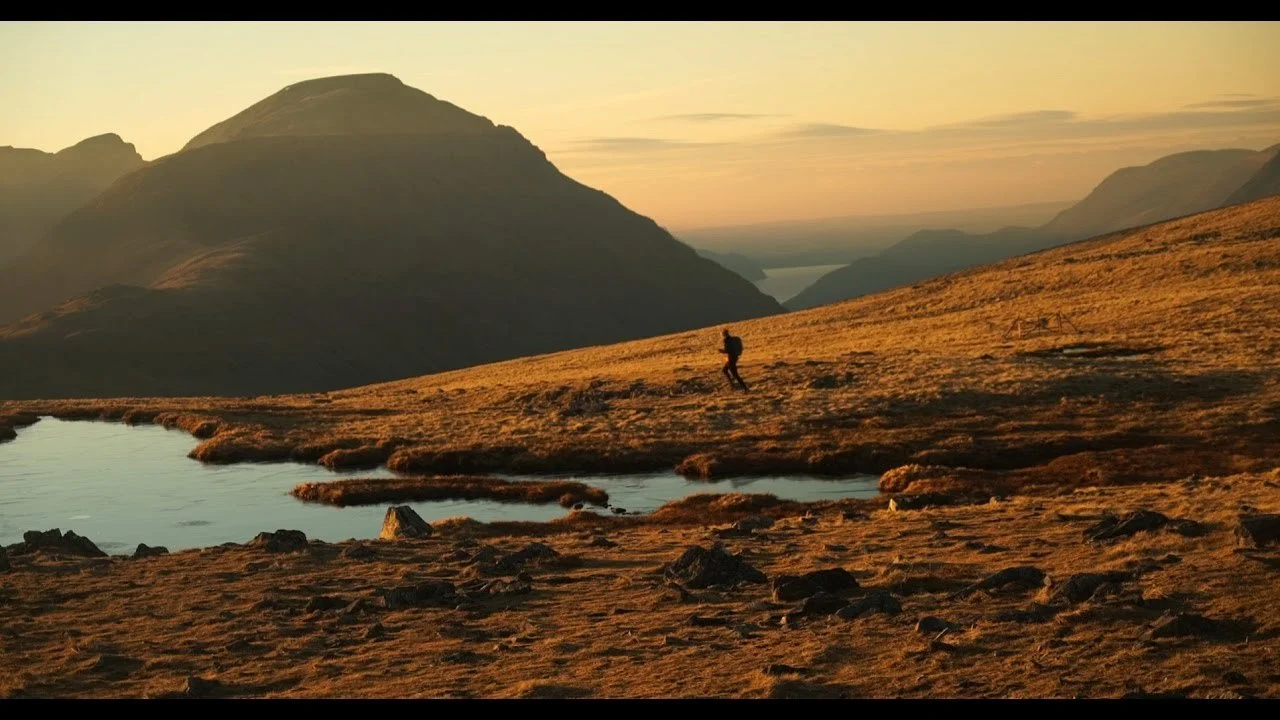
In 2023, I ran my first ever ‘fell’ race in the UK’s Lake District - 21 kilometres of rough, wet, hilly, misty trails alongside 200 or so others. There was something about the event that, at the time, I couldn’t quite put my finger on; something especially authentic... something primitive even... and something remarkably honest...
Now, in reflection, I realise that the best word for the experience I had was perhaps *Amateur.
*French origin, meaning ‘one who loves’
Amateurism, it seems to me, has gotten a bit of a bad name over the decades. To be ‘the best’, to be successful or at least ‘professional’ at something is generally the path of choice. Find what you’re good at and do your best to rise up the ranks in that chosen field of work, study or athletics etc etc.
Many people, however, forget (or never knew) that sports always used to be amateur until very recently. Roger Bannister, the first to ever run a 4-minute mile, was a full time Neurologist. His competition, and their coaches, were equally dedicated to their everyday lives outside of their training. There was zero money to be won, and nor were the Olympics or other highly regarded races set up to make lucrative profits for anyone involved.
Only since World War 2 and the relative political stability established worldwide (as well as the growth of the internet and global media) have sports become an entertainment industry capable of funding and sponsoring its participants. One perspective would be: great, now these passionate, talented individuals get to train and compete full-time, and we all get to enjoy watching them do it! The other perspective is that something sacred, human, holistic, vital is lost when one’s paradigm shifts from that of an Amateur to a professional - both at an individual level and as a collective.
There are various lenses through which this topic can be explored, and that ultimately suggest Amateurism to be a superior paradigm to that of Professionalism, both physically and spiritually for any human culture. Furthermore, as the Lake District’s fell-running scene is closest to my everyday eye, this culture will be used as an example of broader principles that can be applied across all domains; business, community, athletics, finance, entertainment, fashion etc.
The Money Issue
Money works in mysterious ways. Remarkable research has shown the effects of affiliating positive outcomes with financial rewards: once you take away the money then in almost all cases then the positive behaviour disappears with it. Rewards such as human appreciation, though humble, are long-lasting and only add to strengthen the likelihood of repeated ‘good behaviour’.
Why do race organisers, volunteers, club administrators, coaches and marshals give hours of their time and diligent, focused work for their fell-running club? Because they see their efforts positively influencing the lives of their neighbours, colleagues, friends, family and fellow runners...
Pay the same people to do the same work and the whole equation changes. It is not altruistic at the same level. It is not kind or ‘heroic’ anymore. It’s just a ‘job’. Moreover, as the research shows, if the money gets slashed then so too will the behaviour.
Professional runners today are in service of their brands and other financial sponsors. Perhaps they have other noble causes and live wholesome lives in various ways, but they are employees of corporations nonetheless, and are therefore ‘subject’ to the ethics, rules, philosophy and future plans of such companies. An amateur, on the other hand, runs where, why, how and when they want. A professional runner can also... providing their sponsor agrees. It’s a small detail but, over a life time, could become a much bigger issue than it first seems.

The Social Bond vs The Bottleneck
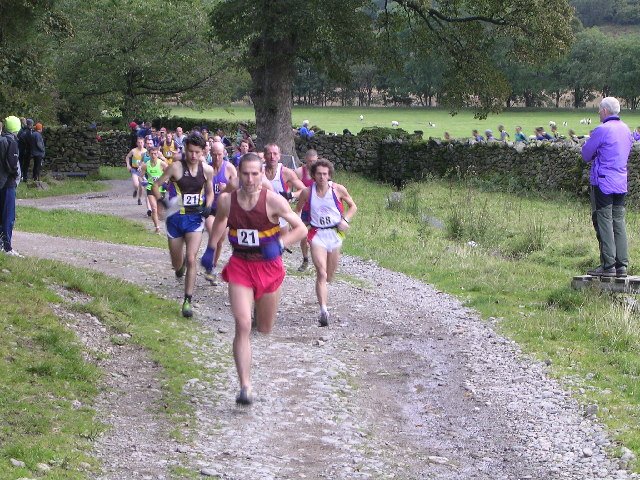
Another striking thing for me, during my first fell race experience, was the sheer equality between everyone. It was genuinely impossible to tell who the past and current champions were, who was a fell-running legend and who (like me) was a newbie. The marshals were also runners, I found out after; the registration staff also, as well as the race organiser. I dare say some of the other volunteers just liked to help and enjoy the occasion, and weren’t runners themselves. I had no idea!
Only after sharing a lift, a pint and a chat about football with a guy called Rich did I realise he was elite of the elite within the fell scene. He’d completed many of the outrageously tough ‘rounds’ that put fell running (sort of) on the map, and had his eye (rather casually) on many more.
Compare this with the stardom of Marathon, and even some Ultra-Marathon, runners these days and its ‘day and night’. The chances of hitching a lift, sharing a pint or even getting close enough to see runners such as Eliud Kipchoge or Kilian Jornet are getting increasingly smaller and smaller. The gap seen with other sports, of course, is even wider - with certain professional footballers, boxers, tennis players, basketballers etc being God-like figures around the world. It’s not that they wish it to be that way, and I expect that many of them are wonderful, humble and friendly people. But the system through which one enters in order to live off the sport allows no other way.
Salomon, one of the biggest outdoor adventure brands, for example, needs their athletes at the events with the most exposure and, in turn, the highest chance of their products being seen. Equally, the Instagram account of their athletes become the glorified ‘museum’ of their lives - showing the endlessly breath-taking panoramas, physical feats and shiny, happy faces wearing their gear.
Hence the ‘bottleneck’ arrives, like in other giant industries such as film, music and fashion, whereby the 0.1% of athletes obtain 99.9% of the views, followers and media attention. With an entire team paying for and promoting an athlete’s journey, it’s understandable and well-executed, of course, on the company’s behalf.
But then maybe we should ask ourselves: Are we seeing a human or a brand? An athlete or a celebrity? An inspiring role model or a corporate entity?
There might not be, I’d argue, any ‘problem’ necessarily with this equation. Money makes the world go round, and it’s up to us as individuals to see through any superficial layers present and stay close to the real, grounded truths behind them. Equally, business is hard and companies perhaps should be able to use anything they can to survive and thrive, especially if their underlying message is still somewhat pure. That message being, in Salomon’s case: get outside, move your body and explore.
The truth remains, however, that bottlenecks are likely not what sustains effective human communities or long-lasting connections. Real face to face exchanges with real people in real places is what does that, and the fell-running scene, more than anything else, has shown me the true power of that.
Less Is More
I’m often surprised by how simple people actually are. Usually beneath our weighty, impressive goals there’s a more basic need to be heard or seen for what we are, to share an experience of some kind with others and/or to have overcome something previously never done before. We want to grow, to feel and to connect. Everything else is just the sexy stories we make of it.
I wanted to be a professional football player for most of my teenage years, essentially because it was the best route for me to ‘shine out’ amongst the crowd. Of course, this intention never brought me there, just as being ‘the best’ at something hardly ever breeds the kind of lasting contentment, connection and purpose that we all seek more than anything. When I (re)found things that nurtured me in many other, more sustainable ways, I could gradually let go of that dream and enjoy playing football again simply for the sake of it.
Everyone has their own journey, but the story of the professional or the ‘genius’ or ‘expert’ is one that’s told time and time again. The young talent who keeps struggling for the next best thing, the next ‘carrot’, before finally realising there’s much more to life than winning, than being the best and ‘keeping up appearances’ for the sake of his/her skilled identity, brand, legacy, record etc.
Professionalism, in today’s world, draws even the most humble in. And before they know it, once they’ve burned their other bridges (and identities), their basic survival and that of their families depends on continuing to feed their expert identity, and in many cases to keep on winning against a legion of other professionals also. Rare is the athlete (or musician or model or actor), it seems to me, who’s able to remain a true ‘amateur’ throughout his/her career, and especially when the money and brands come calling.
I like to think they exist however, and I love to read about and witness those whose humility and ‘humanity’ has remained in tact despite rising to the top of their field.
The Cultural Factor
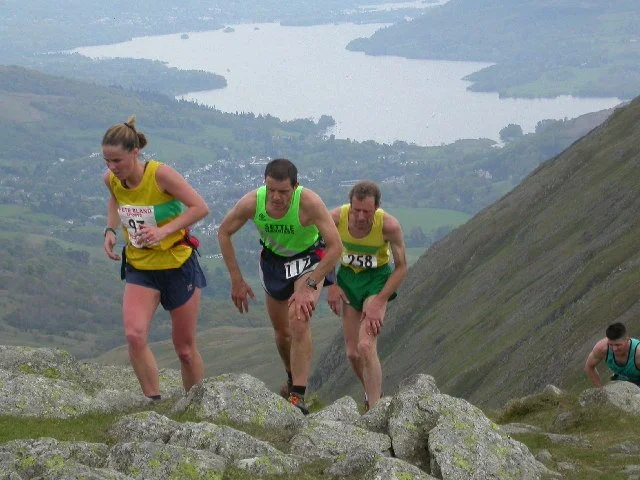
Human beings, no matter how you see it, are largely a product of their environments. The systems, social structures and organisations we create will have a giant impact on the way the average citizen behaves - how they relate, interact and educate themselves and others. The amateur fell-running world, for example, has remained so ‘grass-roots’ and ‘bottom-up’ that there is simply no opportunity, no encouragement or incentives to estrange oneself from the rest or to lose the connective bonds that, under the surface, bring all of humanity together.
The race winners (and even the multiple-time National Champions) pay the same small club fees, eat and drink at the same post-race pub, share the same transport, wear the same gear, stand at the same chaotic, huddled start line and work the same kind of ordinary job once it comes to Monday morning again.
As fell-running ‘legend’ Joss Naylor puts it: “I just want to be remembered as Joss Naylor. Nothing bloody fancy. Just a simple fella who likes to do a bit of good”.
There are other hilarious (and highly amateur) fell-running stories also, involving losing shoes in the mud, getting kicked by cows and storing mars bars in their underwear. If you want to enjoy these amateur tales, and more, I highly recommend Feet In The Clouds, by Richard Askwith.

Conclusions
A lot of education and self-development stems from avoiding the ‘land mines’ of life, just as it involves embracing risk, challenge and spontaneity also.
What would you do with your time and energy if you had all the money you’d ever need? Or in other words, if you could ‘afford’ to be ‘non-professional’, what type of amateur would you wish to become?
This is a brilliant question to keep ourselves on track, and to ensure that our life choices, and their underlying motivations, arise deep from the soul. Of course, real life always involves some level of compromise. We might still need to work the ‘boring’ job for a while to create opportunities for what we really love to do most. And, if so, perhaps it won’t feel so boring in fact, because we’re at least aligned with our higher (amateur) purpose.
I’ve been a full-time writer, full-time athlete and full-time creative entrepeneur for various periods of my life. Trust me... it’s far, far, far from the dream you might imagine it to be. Without some humble and varied down-to-earth responsibilities, I realise, my life always felt a bit empty. Hence, at the time of writing this, I’m changing sheets, pouring pints, making toasties, washing dishes and toilets for 25 hours a week, tutoring teenagers online for 3-5 hours a week also, as well as co-running a non-profit Movement magazine, studio and coaching practice, and training/hiking/running as much as my other time allows me also. I’m pretty far from a professional at any of those things and, personally, I love it.
I get to improve, learn, undertake brave, creative experiments and mistakes galore, without any of it mattering too much whatsoever. Worst case scenario, I’m still an amateur - right where I belong, and perhaps right where we all belong...
Some final words of humble (amateur) advice: avoid shunning the place you’re in right now - the house, the job, the family etc. If you’re still an amateur in at least one or two domains then it’s probably a good thing, and you’re exactly where you need to be. The journey is the destination, as they say, and there’s a hell of a lot of fun to be had in the struggle!
*Written for and published in ReMo Magazine Issue 4…
Did you enjoy this blog? If so, click here to support Daniel’s work…