Standing Still: A Therapeutic Practice
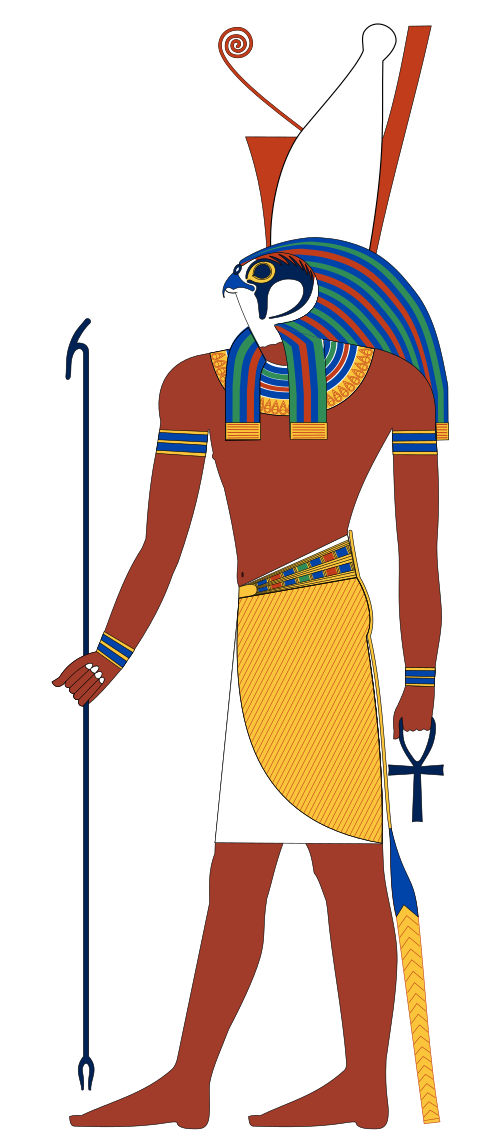
I’ve been standing still a lot recently - some call it a ‘standing pole’, others a standing meditation (the yogis a ‘mountain pose’ with palms facing forward). Others, still, might find me just an extraordinary weirdo and not know WHAT to call it.
It’s my latest ‘Courage’ challenge; a formal chalkboard we have in our house designed to encourage the making (and breaking) of certain habits. I’ll stand still for 20 minutes a day, for 1 week, and see what it brings me. Perhaps the habit will stick, grow larger or smaller, or disappear altogether. So far, however, it’s been very revealing, and so I wanted to explore, through words, what might be happening within my mind-body system during this practice, and what further investigations it might lead to, for the sake of my own personal development, as well as that of my small audience of readers, students and colleagues within the world of movement.
I used to practice these 'standing' methods quite a lot throughout my years of teaching and hosting workshops at ReMo Studio, Amsterdam. I was curious about the effects on the physical structure of the body - how it might strengthen and stabilise my ankles and knees in particular (especially due to a history of football injuries). I also, admittedly, rather loved the Zen aesthetic of the practice; what it represented and ‘impressed’ upon watching strangers, or an audience. I admit to being a bit of a 'sucker' for simplistic rituals (for better or worse), as well as the poetic musings of Eastern teachers such as Thich Nhat Hanh, Krishnamurthi and the many great Sufi Poets of past and present. And so when I read about the 4 Zen Dignities in Alan Watts' 'What Is Zen?' I was very curious how these 4 basic acts (lying, sitting, standing and walking) might be worth investigating more deeply.
There is a saying in some Mindfulness literature that one's ability to run says nothing of one's ability to walk, and that if one cannot sit then one cannot stand, let alone walk, etc etc. Of course, I don't proclaim this as being true per se - it's obviously way too simplistic to draw any real conclusions about how we should live or move in the world. And yet the idea of stripping back some of our usual daily noise on a semi-regular basis (or indeed our habitual moving patterns, whatever they may be), to pay closer attention to the smaller details, seemed to be both potentially of great value and also with very little physical risk involved.
I started to sit a little longer in daily meditation but also to observe my body, my thoughts and emotions when in the lying down position and also when standing still with my eyes closed. Could it be that my various postures carry their own individual story? Based on my own past experiences, and the various emotional and physical content produced when in such poses...? When I stood, for example, it was as if an invisible force was pushing my head down from behind. Sentences and various 'judgements' repeated in my mind - you are arrogant, who are you to stand so tall and take up space?!, you should be more humble, more quiet, more invisible.
Standing up 'straight' (which I suspect wasn't in fact geometrically totally straight at all) was a rebellion against my past self, the people and places that had condemned me for expressing my 'bigger' self - creatively, confidently, sexually, physically or otherwise. My mind visited past bosses that taunted me, football coaches that condemned my every mistake and various friends and family members that were highly uncomfortable and triggered whenever I would behave in 'foreign' ways to them (like in seated meditation, or simply in silence or with my eyes closed).
Furthermore, and as the days progressed, I noticed that what I was experiencing throughout the 20 minutes of standing was also perhaps the choice to choose again! To revisit such moments (subconsciously) and choose how to respond differently or the same. My recent research into the work of Moshe Feldenkrais also points to this important theme of choice, for the sake of ease and harmony in the nervous system and, in turn, the way the body and mind is experienced in such moments. Put simply, the more options one has at his/her disposal, to move, to communicate, to behave in different ways etc then the lower one's underlying level of anxiety, fear and/or helplessness might be. At least this is one simplified 'take-away' of mine from Feldenkrais' 'Illusive Obvious' text.
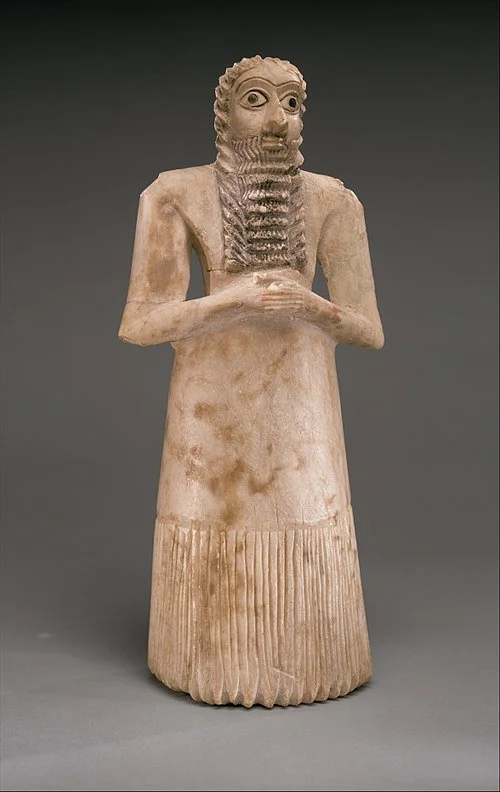
Personally I have found this to be rather true at various key junctions in my life so far, and during standing also: when I extend my arsenal of reasonable and self-accepted responses to different situations, I feel more free, more confident, more abundant and more at peace in my body in general.
It indeed feels true, after all, that I am 'free' to yell back at my boss, to simply walk off the football field if I choose to, to express vulnerably my emotions to any friend or family member, and everything else in between. Ignoring whatever ethical framework or context-specific rules we might place on ourselves or others, actually the human being has tremendous potential to express itself in countless ways, and to continue to learn and adjust to these ways throughout its entire life. It's not that to behave more aggressively as appose to 'sheepishly' feels in itself 'more correct', but the embodied awareness that it is at least in my vocabulary as an option and a choice might, I suspect, provide for more harmonious experiences and outcomes over time. So far, in my personal life since starting this practice, it at least seems to be the case.
As Feldenkrais explains, it might be the wonderfully trainable human brain organ that, through the highly adaptive nervous system, more than anything allows for this. The human brain is approximately one fifth only of its eventual adult size when born for example - in stark contrast to even the 'higher' animals whose brains are at least 60-70% of their eventual maximum volume already when born. This extra 'room for learning' requires a more extensive apprenticeship from parents / society but gives us the benefit of choice, adaptability and adjustment throughout our upbringing, as appose to the more instinctive and reflexive animal species existing. It seems also that, once learned, these physiological circumstances allow us to change and re-adjust our past learnings relatively quickly and effectively also.
Though still relatively limited in my deeper understanding of the Axis Syllabus and its potential applications, I can already see that the beauty of it's knowledge is partly its appreciation for this immense potential we have to move, learn and re-learn ourselves in almost infinite ways, regardless of our profession, physical modality, age, gender or disability etc.
Physically, emotionally, socially, I wonder if we have not ALL been blown about by the wind, consciously or unconsciously, in our own unique ways since birth? A habit of reducing the wind to a harmonious breeze, or calming it altogether, might be a useful step in the right direction, rather than yet another blast in the storm (eg. yet another new physical practice to combat the limitations of past ones). I personally have found that it's been more revealing and educative to become aware, through first-hand conscious experiences of simple postures (such as standing), where the wind comes from, as appose to building armours and weapons against it or, likewise, placing various other habits or 'medics' on stand by in anticipation of the next hit.
The exact details of the posture are perhaps irrelevant - after all there are many ways to stand and it might be a mistake to think there is one correct, uniform way of standing. But by deciding the still posture beforehand I can experience the internal movements (thoughts and emotions especially) that otherwise I find are more easily hidden or distracted by physical movements during other periods of my day.
Are we meant to be like sailing ships, carried and directed by external winds? Or are we not also rocks, or at least trees - capable of cultivating strong, long-lasting roots?
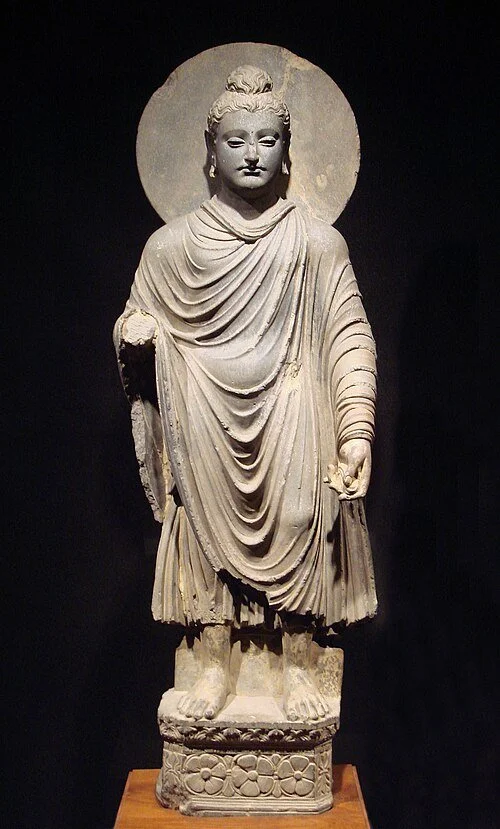
The standing pole, for me, also represents my innate potential for holding myself in place, whether that be my body, ethics, morals, family, practices or beliefs. To stand still, to do nothing, to not react at all, is also a choice after all. And personally I've found a rather useful one! After all, I needn't argue back OR shy away from an angered friend, aggressive stranger or stressful boss. I can hold my ground, breathe and observe the inner and outer workings of my body and mind. This is an obvious choice that has remained an invisible friend, yet to be frequently visited, throughout many circumstances in my life.
And so, like all of such meditation techniques, if my mind wanders when standing, or gets distracted, then I notice it and try to return immediately to the scanning of my body. Naturally, close attention to the breathe is required for this to work - it is through the breathe that my attention seems to spread effectively across each body part.
To return to Feldenkrais again, is it indeed the muscles of the body that 'keep the score' or 'store the response' as we might say? Residual tension (be it from anxiety, fear, jealousy, anger etc) that becomes a normal way of feeling and being, so that we forget how it ever was to feel deeply relaxed, open, tender, childlike, curious... To quote Feldenkrais once more, "the systematic removal of unnecessary effort is more beneficial than the completion of any task". Imagine a Ferrari that hasn’t been cleaned, maintained or well-kept... it's reasonable to say that it might be better to clean, oil, polish up the engine and tires, for the long term health of the car, than to simply feed it more gas or upgrade it’s horse power or engine size etc. In my case, this might mean simply reducing subtle levels of baseline tension and/or reacting less strongly to certain emotional triggers when they (inevitably) arise.
This physical (muscular) reality that each of us lives and resides inside, however, is perhaps also deeply entwined with the story we each have of ourselves (our 'self-image'). As Ido Portal interestingly mentioned in a recent podcast: "the monk sits all day and gets enlightened; while the store clerk sits all day behind the till and gets depressed". To some degree it's the story and context that matters perhaps, more than the action itself. There are infinite examples of smokers living above 100, overweight individuals achieving surprisingly dexterous physical feats, and supposedly 'super-athletic' people falling apart when faced with a relatively straight-forward physical puzzle (balancing on one leg, humming in tune or stepping in time to music for example).
As Frey Faust reminded me of recently, human babies raised by wolves have been shown to grow up walking on all-fours, rather than on 2 legs as one might naturally expect. Indeed, our ability to perceive, learn, imitate and change as humans is truly remarkable and almost without limits; the story and context might decide things much more than we realise - the perception and beliefs we have about our own habits and actions, rather than what the media or our close community around us tells us about them, for instance.
An invitation for readers, in conclusion, might involve the following: identify some of the prevalent moments and experiences of your life so far, then observe which physical postures you may have adopted in such situations (standing, lying, sitting, dancing or otherwise).
Take some minutes, in a quiet controlled space, to stay in one of these specific postures (personally I find that at least 5-10 minutes is required for certain deeper thoughts and emotions to arise; though this is I expect highly personal). My expectation is that these may result in some form of lying, sitting, standing or walking, though this needn't prevent another form from arising. Lastly, giving a clear end point to the investigation I find allows me to surrender more effectively into the practice - knowing that after 7 days I'm 'allowed' to end the whole thing and possibly never return to it again gives me more peace of mind and generally a more curious 'beginner's mindset'. James Clear's 'Atomic Habits' details much scientific research concerning such timed frameworks, though I hesitate to claim any expertise or truth around my personal '20-minutes a day for 7 days' approach being the 'best' one for you or anyone else that might be reading.
Lastly, I'm always reminded of George Box's great line: "all models are wrong, some models are useful".
Standing still (or stillness in any form) is probably another wrong model, but it may indeed be a highly useful one; and if it brings us a few inches closer to the infinite truth of how best to live and move in the world then I like to think that it's time well spent.
Personally, I'm continuing to enjoy the subtle fruits of what it gives me, and continue my similar investigations in the realms of lying, sitting and walking also. My running form seems to have improved and my left knee especially is sturdier than ever (the main site of past injuries). I talk to my parents differently, find it easier to give honest and vulnerable feedback to those around me, and generally feel more aware of subtle fluctuations in my mood, emotions and energy levels throughout the day. I'm curious what other feedback different postures, when practiced in such ways, might produce for myself and others, and if there are any limitations at all to the broad scope of subjective experiences and investigations possible for us human bodies!
Did you enjoy this blog? If so, click here to support Daniel’s work…